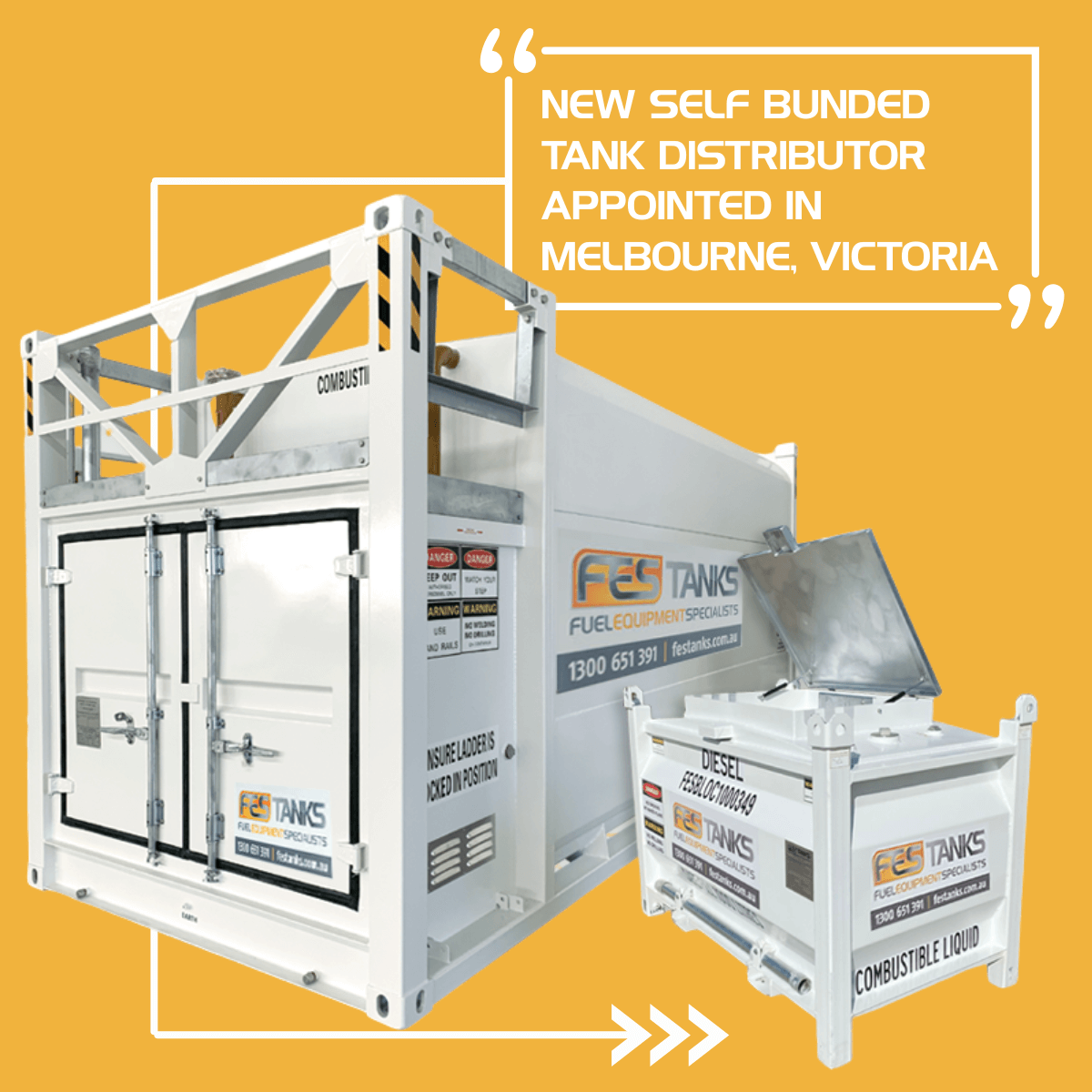
New self bunded tank distributor appointed in Melbourne, Victoria
Press Release: Cairns, Queensland, Australia. Feb 10, 2026, 08:14 ET
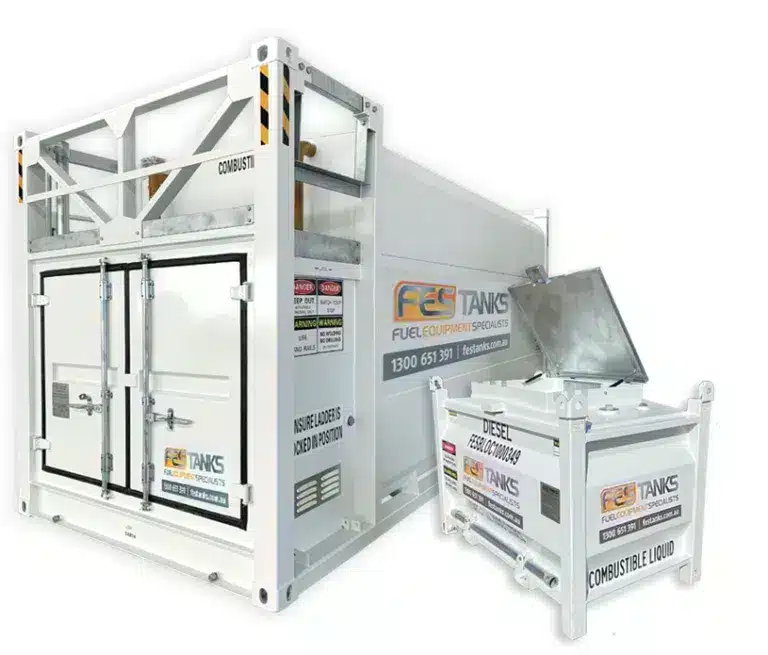
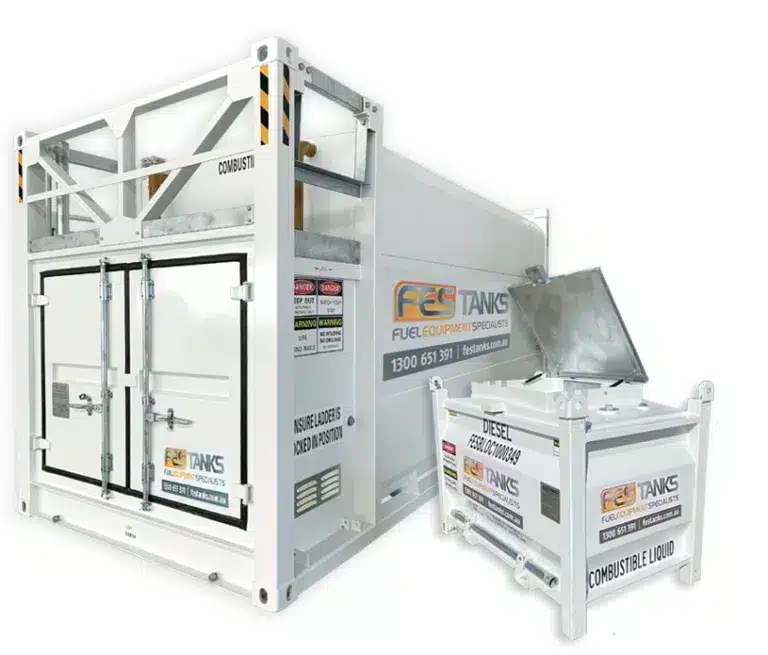
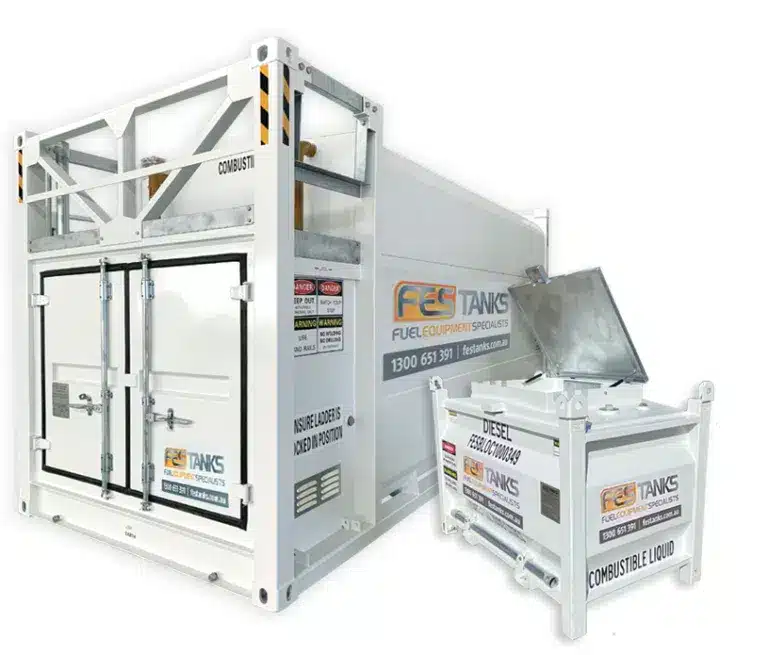
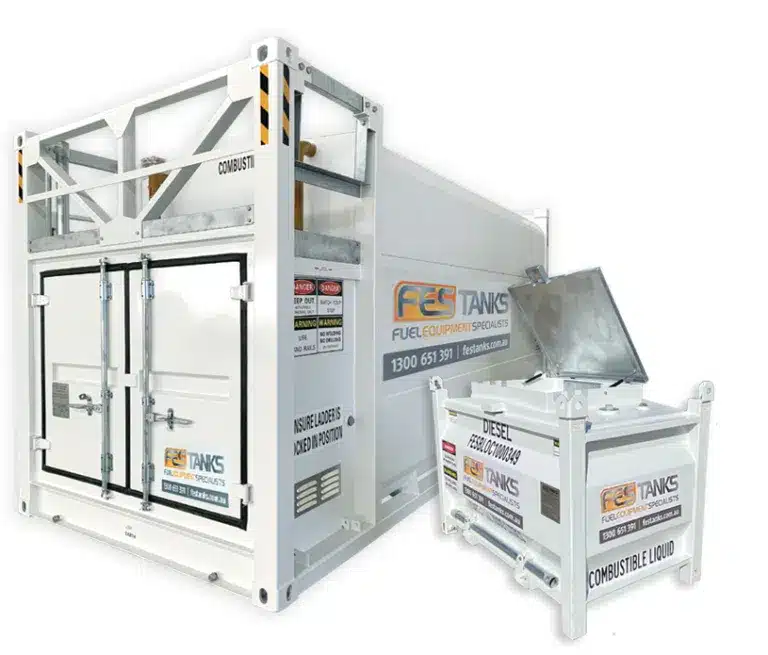
Nqpetro will be the new Melbourne distributor for the F.E.S. range of Australian-designed self-bunded fuel storage tanks, expanding the longstanding partnership between two leaders in fuel storage and dispensing solutions.
F.E.S. TANKS is an Australian-owned, trusted supplier of professional-grade self-bunded fuel storage tanks and mobile refuelling solutions to the transport, agricultural, commercial, industrial, mining, aviation and fuel retailing sectors.
Nqpetro Head of Bulk Tank Sales Brandon White said the new distributorship was a win for Melbourne businesses wanting affordable quality fuel storage options that could be delivered and installed quickly and easily.
“Nqpetro has been partnering with F.E.S. TANKS for 20 years and we’re pleased to be able to bring the benefits of their Australian made self-bunded Bloc and Grande tanks to customers in Melbourne and across Victoria,” he said.
“F.E.S. tanks are a genuinely awesome high-quality product that’s built for Australian conditions and is fully compliant with Australian regulations.
“When refuelling needs are changing quickly – particularly with severe weather events like those recently experienced in Melbourne – the F.E.S Bloc Tank range offers a fully transportable, flexible drop and go storage solution to power generators and equipment when and where they’re needed.
“They’re a really robust tank that’s built to last, with practical features that make them easy to use, transport and maintain – which is why so many customers come to us for repeat work.”
F.E.S. TANKS Director Daryl Cygler said the new Melbourne distributorship would bring Victorian customers the benefits of the F.E.S. range combined with Nqpetro’s proven expertise in fuel storage and distribution in Australian conditions.
“Nqpetro are experts in fuel storage and distribution, with more than 20 years’ experience in designing fuel solutions using F.E.S. TANKS,” he said.
“They’re a great team with proven experience designing fuel storage and distribution systems that meet the particular needs of clients across Australia.
“Working together in Melbourne means we can be even more responsive in meeting the needs of Victorian, Tasmanian and South Australian customers.”
Established in 2013, their reputation for offering environmentally-friendly fuel storage tanks with unique fuel dispensing and management solutions has led to fast national growth and expansion.
F.E.S. TANKS works with industries on the move to provide innovative, next-generation fuel storage solutions designed to take business into the future.
Nqpetro is a national supplier of storage and pumping solutions for petroleum and hydrocarbons.
They provide products and services to industries including mining, aviation, agriculture, transport and government services, with a proven track record for delivering major projects on time, on budget and in full compliance.
Expansion into Sydney workshop expected to open up self bunded tank sales
Press Release: Cairns, Queensland, Australia. Jan 13, 2026, 09:27 ET
Sydney customers will have ready access to the in-demand F.E.S. TANKS range of self bunded fuel storage tanks, with key distributor Nqpetro investing in a new Sydney workshop and office facility.
Nqpetro Head of Bulk Tank Sales Brandon White said the move meant the in-demand F.E.S. range of bulk fuel storage tanks could be stored and worked on locally in a controlled workshop environment and shipped quickly to sites across Sydney and NSW.
F.E.S. TANKS is an Australian-owned, trusted supplier of professional-grade self-bunded fuel storage tanks and mobile refuelling solutions to the commercial, industrial, mining, agricultural, aviation and fuel retailing industries.
Nqpetro are market leaders in end-to-end fuel storage and distribution solutions and the appointed distributor for F.E.S. TANKS in Sydney and New South Wales.
Brandon said Nqpetro had a longstanding relationship with F.E.S. TANKS.
“Nqpetro chooses F.E.S. TANKS because they are a genuinely awesome high-quality product that’s built for Australian conditions,” he said.
“We’re looking forward to transforming fuel storage solutions for clients in Sydney and New South Wales with the F.E.S. tank range.
“A lot of customers come to us for the repeat work because they know the F.E.S. range just holds up better, from being transported long distances across corrugated roads to handling the extreme weather.
“They’ve been installed in some of Australia’s harshest environments and have stood the test – and that means lower costs for business in terms of maintenance and replacement, as well as keeping fuel in top condition for longer.”
F.E.S. TANKS Director Daryl Cygler said having a dedicated Sydney base meant ready access to the F.E.S range of design and drop fuel storage tank solutions for local customers.
“Nqpetro are experts in fuel storage and distribution, with more than 20 years’ experience in designing fuel solutions using F.E.S. TANKS,” he said.
“The Nqpetro-F.E.S. TANKS partnership has stood the test of time and with their expansion into Sydney, together we’ll be able to hold more stock and service new orders faster.”
“We’re all excited as to the logistical benefits this will give Sydney and New South Wales customers.”
Established in 2013, their reputation for offering environmentally-friendly fuel storage tanks with unique fuel dispensing and management solutions has led to fast national growth and expansion.
F.E.S. TANKS works with industries on the move to provide innovative, next-generation fuel storage solutions designed to take business into the future.
Nqpetro is a national supplier of storage and pumping solutions for petroleum and hydrocarbons. They provide products and services to industries including mining, aviation, agriculture, transport and government services, with a proven track record for delivering major projects on time, on budget and in full compliance.
Nqpetro’s expansion into Brisbane warehouse expected to open up self bunded tank sales
Press Release: Cairns, Queensland, Australia. Jan 06, 2026, 01:14 ET
F.E.S. TANKS has expanded its footprint in Brisbane, with key distributor Nqpetro investing in a new 8000 square metre south east Queensland headquarters at Brendale to keep the F.E.S. range on hand for SEQ clients.
Nqpetro Head of Bulk Tank Sales Brandon White said the move meant the in-demand F.E.S. range of bulk fuel storage tanks could be stored locally in a controlled environment – ready to meet customer needs, from bulk fuel farms for mining to waste oil storage for metropolitan workshops.
F.E.S. TANKS is an Australian-owned, trusted supplier of professional-grade self-bunded fuel storage tanks and mobile refuelling solutions to the commercial, industrial, mining, agricultural, aviation and fuel retailing industries.
Nqpetro are market leaders in end-to-end fuel storage and distribution solutions and the appointed distributor for F.E.S. TANKS in Brisbane and the surrounding areas.
Brandon said Nqpetro had a longstanding relationship with F.E.S. TANKS.
“Nqpetro chooses F.E.S. TANKS because they are a genuinely awesome high-quality product that’s built for Australian conditions,” he said.
“A lot of customers come to us for the repeat work because they know the F.E.S. range just holds up better, from being transported long distances across corrugated roads to handling the extreme weather.
“Apart from being more structurally sound than their competitors they also have engineered lifting points welded and sealed into the tank, which is a huge advantage for compliance.
“The F.E.S. TANKS range has every need covered – we work with them because they’re a genuinely high-quality product.”
F.E.S. TANKS Director Daryl Cygler said having more tanks on hand through Nqpetro’s new Brendale base meant ready access to the F.E.S range of design and drop fuel storage tank solutions for local customers.
“Nqpetro are experts in fuel storage and distribution, with more than 20 years’ experience in designing fuel solutions using F.E.S. TANKS,” he said.
“The Nqpetro-F.E.S. TANKS partnership has stood the test of time and with their investment in the new Brendale facility, they will be able to hold more stock and service new orders faster.”
“We’re all excited as to the logistical benefits this will give Brisbane and South East Queensland customers.”
Established in 2013, their reputation for offering environmentally-friendly fuel storage tanks with unique fuel dispensing and management solutions has led to fast national growth and expansion.
F.E.S. TANKS works with industries on the move to provide innovative, next-generation fuel storage solutions designed to take business into the future.
Nqpetro is a national supplier of storage and pumping solutions for petroleum and hydrocarbons. They provide products and services to industries including mining, aviation, agriculture, transport and government services, with a proven track record for delivering major projects on time, on budget and in full compliance.
New self bunded tank distributor appointed in Adelaide, South Australia.
Press Release: Cairns, Queensland, Australia. Nov 17, 2025, 16:51 ET
F.E.S. Tanks, Australia’s market leader in self-bunded fuel storage tanks, has expanded its reach in South Australia with respected operator Jetstream Electrical.
F.E.S. Tanks is an Australian-owned, trusted supplier of professional-grade self-bunded fuel storage tanks and mobile refuelling solutions to the commercial, industrial, mining, agricultural, aviation and fuel retailing industries.
Jetstream Electrical has recently expanded its operations into SA from the Northern Territory.
Jetstream Electrical Director Kevin Pettitt said his team had been using F.E.S. TANKS for many years, particularly for remote refuelling solutions, and looked forward to bringing the benefits of the products to SA industries.
“Jetstream choose F.E.S. Tanks as they are a great innovative team to work with who offer a wide range of quality products for a diverse range of petroleum applications,” he said.
“We have been distributing their products in the Northern Territory since 2018 and installing them for even longer, with overwhelmingly positive feedback from customers.
“F.E.S. Tanks products are superior in terms of their volume and range and the way they are constructed, making them well-suited for remote installations – they’re really robust, high-quality fuel storage tanks built to withstand harsh conditions and deliver long-term performance.”
“We’re pleased to now be bringing these industry-leading products to South Australia.”
F.E.S. Tanks Director Daryl Cygler said building on the longstanding relationship between FES Tanks and Jetstream Electrical was good news for South Australian businesses.
“The team at Jetstream are experts at designing and installing fuel systems, particularly in remote locations,” he said.
“They know and trust our tanks because they are built to last, with practical features that make them easy to use, transport and maintain – ideal for responding to the challenges of temporary and remote power requirements in the Northern Territory and across regional Australia.”
“We look forward to working with Jetstream Electrical to give South Australian customers access to a top quality, Australian-designed fuel storage solution, backed by local technical know-how.”
Established in 2013, their reputation for offering environmentally-friendly fuel storage tanks with unique fuel dispensing and management solutions has led to fast national growth and expansion.
F.E.S. Tanks works with industries on the move to provide innovative, next-generation fuel storage solutions designed to take business into the future.
Jetstream Electrical has been a trusted name in Darwin and the Northern Territory for more than 10 years, now proudly servicing South Australia through its Adelaide-based depot to deliver expert fuel infrastructure, tank supply, and industrial electrical solutions for clients across the region.
Their team of A-grade licensed tradesmen are specialists in remote electrical and data services and have the skills, knowledge and adaptive ability to meet the changing needs of South Australian businesses.
In 2024 there were about 6.3 million diesel fuelled vehicles on Australian roads, accounting for around 30 per cent of all registered vehicles – and growing.
One of the drivers of that growth is road transport, with 630,000+ registered rigid trucks on the road nationally.
With those kinds of numbers in play and with Australia’s New Vehicle Efficiency Standard now in effect, it’s no surprise we are also major users of diesel exhaust fluid (DEF). Australia currently burns through about three million litres a year and growing, with most of that consumed by our long haul trucking fleets.
Given its critical importance for modern diesel engines, diesel exhaust fluid (DEF) is critical for the nation’s supply chain, including the mining and agriculture sectors. Supplies form an important part of our fuel security planning, with the government investing $49.5 million over four years from 2022 to boost local manufacture.
This means while AdBlue is still the most widely used DEF brand in Australia, there is growing competition from a number of other locally manufactured options.
But what’s the difference and how can you get the best value out of your DEF supply?
What is diesel exhaust fluid (DEF)?
DEF is a key component in lowering emissions from diesel engines and improving efficiency in modern diesel engines fitted with selective catalytic reduction technology.
It’s non-toxic, colourless and odourless and is made of a specific combination of urea and deionized water. Its chemical makeup sits at around 32.5 per cent concentrated urea and 67.5 per cent demineralised water, making it non-flammable and safe for the environment in the case of a spill.
Is DEF the same as AdBlue?
AdBlue is a registered trademark for a specific brand of diesel exhaust fluid and is owned by the German Association of the Automotive Industry (VDA).
It is primarily used in Europe and Australia.
Other brands of DEF are widely used in the United States, Canada, and other markets. Like AdBlue, DEF is composed of 32.5% urea and 67.5% deionized water, making it chemically identical to AdBlue.
In Australia, vehicles equipped with SCR technology can use any diesel exhaust fluid that meets the ISO 22241-1 standard for quality and purity and the AUS-32 specifications. This international standard ensures that the product is free from contaminants that could damage the SCR system.
Any fluid that complies with this standard can be safely used in any diesel vehicle equipped with SCR technology.
Importantly, DEF is not the same as water and urea solution, which can cause damage including build-up of calcium deposits, causing reduced efficiency and lost time.
How does DEF work?
Diesel engines generate high levels of nitrogen oxide – a serious pollutant with significant health risks. To meet emissions standards, manufacturers needed to develop more advanced catalytic conversion technology.
They did this by splitting the oxidation and reduction reactions across two steps, using a liquid reducing agent high in urea. DEF is manufactured to specific ISO standards to optimise this process.
Its active ingredient is the urea. The other key element is the de-ionised water, which means that mineral ions such as iron, chloride and sodium are removed. This is so the chemical reaction or catalyst is more precise.
In vehicles, DEF is stored in its own tank, separate from the diesel and is added to the outgoing exhaust gas by an automated dosing control system. When the fluid is sprayed into the exhaust system the water component evaporates, helping the urea spread evenly. The urea breaks into ammonia and carbon dioxide and as part of this, the NOx is converted by the ammonia into water and nitrogen.
Storing DEF
Since DEF is essential for reducing nitrogen oxide emissions, improper storage can have serious effects, not only for your fleet but also for your bottom line.
In harsh conditions like those in many parts of Australia, constant exposure to high temperatures can shorten the fluid’s shelf life and reduce its performance. This means higher maintenance costs. It can also mean increased vehicle emissions which can result in hefty fines.
The proper storage temperature for DEF is between -5°C to 30°C. Kept in a dry, shaded area, away from direct sunlight, it has a shelf life of 12 months plus.
Bulk storage is ideal for large fleets, helping reduce costs with bulk savings and fewer transport fees – particularly in regional areas. It also helps improve refuelling efficiency, particularly when operating from a central depot or dedicated refuelling hubs.
Preventing contamination
Contamination with even small amounts of dirt, fuel or other foreign particles can also spoil your DEF. To avoid this, it’s important to use well maintained storage tanks and dispensing equipment – ideally, pumps and hoses designed for DEF will minimise exposure to contaminants.
Using non-dedicated equipment can cause serious problems because even very small quantities of fuel/oil/lubricant can cause serious and expensive damage to your SCR system.
Purchasing your DEF from high-quality suppliers also ensures consistent quality. It’s a good idea to also test stored fluid regularly to check for impurities – this will keep your business compliant and protect your fleet, minimising the need for expensive downtime.
Top tips are:
Choose the right tank. DEF is corrosive to aluminium which is why DEF tanks on vehicles are made from stainless steel or non-corroding, highly durable composite material.
Check dispensing equipment. It’s important that seals, hoses, insulation and o-rings are made from quality materials that won’t react with the product. It’s also important to regularly test and clean dispensing equipment for crystallisation and to check nozzles are in full working order and won’t jam or remain open for too long.
Watch the temperature. Store DEF within a temperature range between 0 and 30°C. Ensure the product is protected from direct sunlight and properly sealed when not in use. Evaporation due to storage in hot conditions can cause evaporation and change the water-urea mix.
Test for quality. DEF can be stored safely for about 12 months. If you need to store it for longer it’s important to check it before use to ensure it still meets specifications. If the liquid is cloudy, don’t use it.
The F.E.S Tanks solution
Your storage tank is the frontline of defence to keep DEF in top condition and protect your vehicles.
Even a small amount of contamination – including traces of diesel, oil or rust – can lead to serious issues.
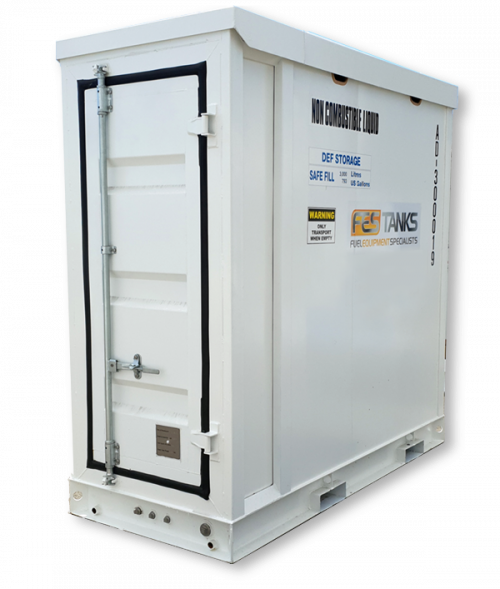
F.E.S Tanks offers standalone DEF tanks in sizes from 3,000-20,000 litres featuring self-bunded design and stainless steel construction, mechanical overfill protection valve, easy maintenance to internal tank with removable lid and forklift lifting points for easy relocation.
For a cost-effective refuelling solution for modern diesel fleets, the F.E.S range also includes integrated AdBlue/diesel tanks that keep installation costs down while making optimum use of space.
The F.E.S. range of integrated DEF/diesel Grande tanks come in sizes up to 110,000 litres (10,000/100,000) and are designed to handle larger storage requirements – ideal for depots and to service the needs of transport fleets.
Ask the experts about F.E.S DEF storage and dispensing solutions by calling 1300 651 391.
With Australian road users going through about three million litres of AdBlue fluid every week, it’s safe to say it’s a critical component in the nation’s supply chain.
And with Australia’s New Vehicle Efficiency Standard now in effect, usage is only going to increase. Euro 6 standards will apply for all existing heavy vehicle models in Australia from November 2025. The standards applied from January 1 for all new cars, SUVs and light commercial vehicles introduced into Australia. Practically, this means introduction of selective catalytic reduction (SCR) technology across a broader range of models.
With this in mind, effectively managing AdBlue supply and storage is more important than ever.
What is AdBlue?
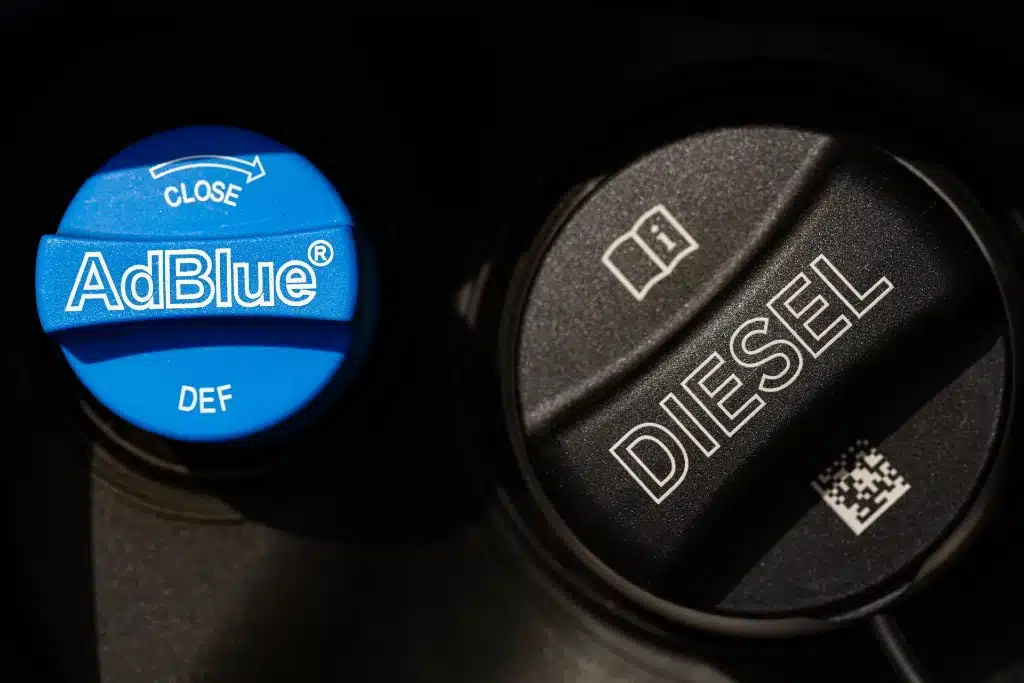
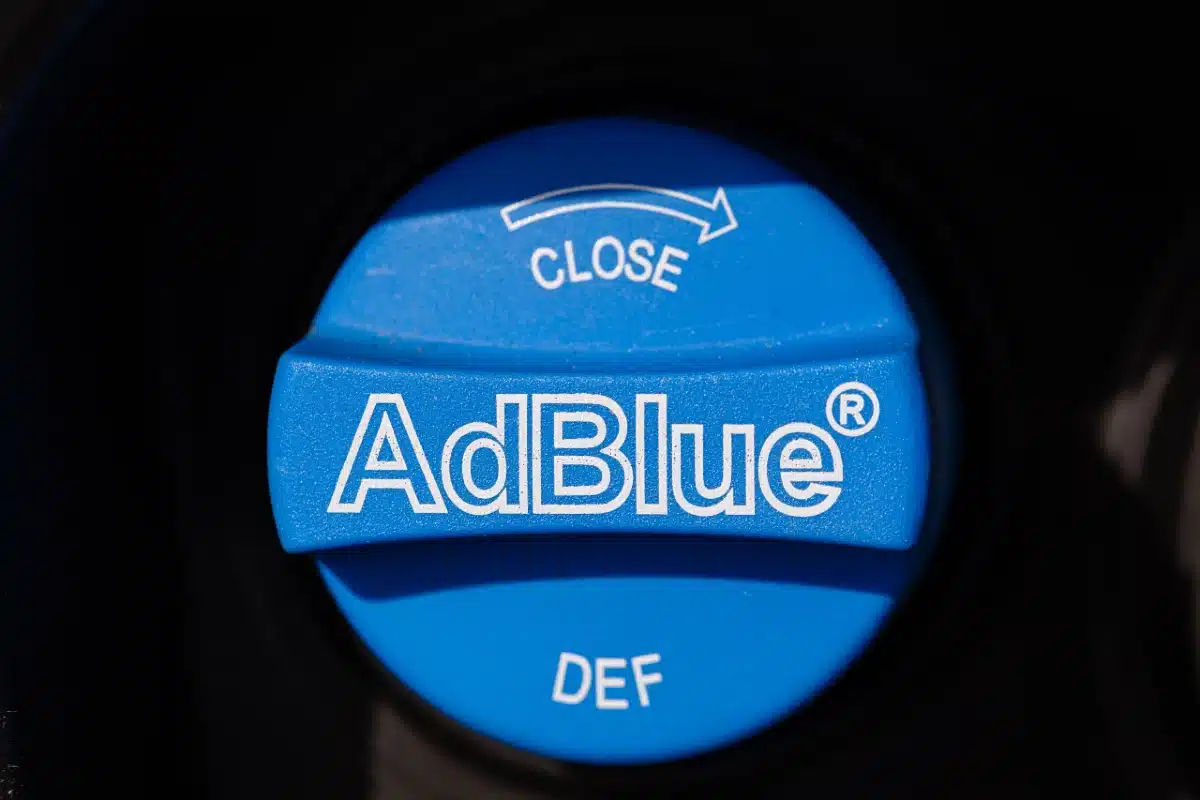
AdBlue is the trademarked name for a diesel additive called diesel exhaust fluid that reduces the emissions generated by modern diesel engines. It can also be called AUS 32, which stands for Aqueous Urea Solution 32 per cent.
Made using a mixture of demineralised water (water with bacteria and ions removed) and a high concentration of urea, it can effectively reduce nitrogen oxide emissions by up to 90 per cent. This makes a real difference in meeting industry-wide emissions targets.
Its chemical makeup sits at around 32.5 per cent concentrated urea and 67.5 per cent demineralised water, making it non-flammable and safe for the environment in the case of a spill.
What does Adblue do?
Simply put, AdBlue reduces toxic exhaust emissions in diesel vehicles. Diesel engines generate high levels of nitrogen oxide – a serious pollutant with significant health risks. To meet emissions standards, manufacturers needed to develop more advanced catalytic conversion technology.
They did this by splitting the oxidation and reduction reactions across two steps, using a liquid reducing agent high in urea. AdBlue is manufactured to specific ISO standards to optimise this process.
Its active ingredient is the urea. The other key element is the de-ionised water, which means that mineral ions such as iron, chloride and sodium are removed. This is so the chemical reaction or catalyst is more precise.
In vehicles, AdBlue is stored in its own tank, separate from the diesel. An automated dosing control system adds it to the outgoing exhaust gas. When the fluid is sprayed into the exhaust system the water component evaporates, helping the urea spread evenly. The urea breaks into ammonia and carbon dioxide and as part of this, the NOx is converted by the ammonia into water and nitrogen.
About 90 per cent of the NOx can be eliminated in this way. To put this another way, it would take the emissions of over 60 new trucks to match the emissions of a well-maintained 20-year-old truck without this technology.
How much AdBlue does a vehicle use?
The amount of AdBlue used varies between vehicles and depends on driving conditions.
On average, AdBlue consumption is about 5 per cent of diesel consumption for trucks – that’s about 5 litres of AdBlue for every 100 litres of diesel, or about 1.5 litres for every 100km on the road.
For cars, most modern diesels have an indicator on the dashboard that reminds a driver when AdBlue levels reach their lower limit. On average, it needs to be refilled after 5,000 to 10,000 kilometres.
Buying and storing AdBlue
AdBlue is non-hazardous or dangerous, but there are some considerations to ensure optimum storage.
Top tips are:
Check the standards. Your AdBlue should display the certification of the German Institute of Standardisation DIN70700, the International Organisation for Standardisation ISO 22241-1, and meet AUS – 32 specifications. AdBlue is not the same as water and urea solution, which can cause damage including build-up of calcium deposits, causing reduced efficiency and lost time.
Avoid contamination. Don’t use old diesel or oil containers to transfer AdBlue into the tank. Any non-dedicated equipment can contaminate AdBlue. Even very small quantities of fuel/oil/lubricant can cause serious and expensive damage to your SCR system.
Choose the right tank. AdBlue is corrosive to aluminium which is why DEF tanks on vehicles are made from stainless steel or non-corroding, highly durable composite material.
Check dispensing equipment. It’s important that seals, hoses, insulation and o-rings are made from quality materials that won’t react with the product. It’s also important to regularly test and clean dispensing equipment for crystallised AdBlue. Check nozzles are in full working order and won’t jam or remain open for too long.
Watch the temperature. Store AdBlue within a temperature range between 0 and 30°C. Ensure the product is protected from direct sunlight and properly sealed when not in use. Evaporation in hot storage conditions can change the water-urea mix.
Test for quality. AdBlue can be stored safely for about 12 months. If you need to store it for longer it’s important to check it before use to ensure it still meets specifications. If the liquid is cloudy, don’t use it.
The F.E.S Tanks solution
Your storage tank is the frontline of defence to keep AdBlue in top condition and protect your vehicles.
Even a small amount of contamination – including traces of diesel, oil or rust – can lead to serious issues.
F.E.S Tanks offers standalone AdBlue tanks in sizes from 3,000-20,000 litres. Each features self-bunded design and stainless steel construction, mechanical overfill protection valve, easy maintenance to internal tank with removable lid and forklift lifting points for easy relocation.
For a cost-effective refuelling solution for modern diesel fleets, the F.E.S range also includes integrated AdBlue/diesel tanks that keep installation costs down while making optimum use of space.
The F.E.S. range of integrated AdBlue/diesel Grande tanks come in sizes up to 110,000 litres (10,000/100,000) and are designed to handle larger storage requirements – ideal for depots and to service the needs of transport fleets.
Ask the experts about F.E.S AdBlue storage and dispensing solutions by calling 1300 651 391.
Powering the future of sustainable flights with SAF
Australians love their travel and with huge distances to cover between domestic destinations and beyond, our aviation fuel use continues to rise.
And we’re not the only ones – the aviation industry contributes about 2.5% of the world’s total carbon and accounts for about 8% of global oil production.
But as commercial aircraft operators around the world work towards net zero goals, it’s proving one of the most difficult industries to decarbonise.
The demand for jet fuel is growing, particularly in the Asia Pacific region – demand in Australia is expected to increase by 75 per cent before 2050, with Boeing forecasting around 42,600 new commercial jets will be needed over the next 20 years.
At the same time, the limitations of technology make electric engines and alternative fuels like green hydrogen impractical for long haul flights, meaning commercial airlines and defence forces are increasingly looking for solutions in sustainable aviation fuels.
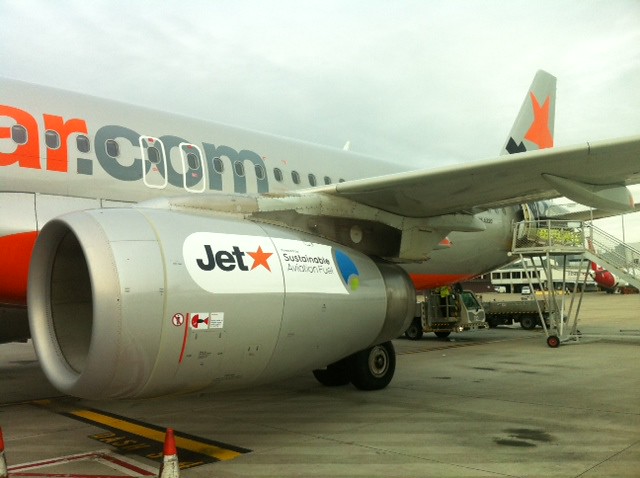
Sustainable aviation fuel – a drop-in replacement for traditional aviation fuel solutions – is quickly gaining a foothold and is already used in more than 250,000 flights.
What is sustainable aviation fuel?
Sustainable aviation fuel (SAF) is a low carbon alternative to traditional jet fuel made from renewable sources like waste or crops.
SAF works with existing aircraft infrastructure. The CSIRO’s Sustainable Aviation Fuel Roadmap says it offers the largest potential to reduce carbon emissions over the next 30 years in all aviation segments.
It’s currently made from five main types of raw materials: oils and fats, sugar and cereal, municipal solid waste, wood and agricultural residue, or renewable energy and carbon, which are used to replace a proportion of the crude oil feedstock.
Depending on the feedstock, SAF can achieve a reduction in CO2 emissions of at least 70% and up to 85% compared to conventional kerosene-based fuel – a significant incentive for airlines when CO2 compliance costs are increasing at around 3.4% a year.
Already, Airbus aircraft are 50% SAF compatible. To address supply, the CSIRO and Boeing are working together to explore production opportunities and Australia and New Zealand are partnering with a view to becoming an integral part of a growing sustainable aviation fuel supply chain.
At Emerald in Queensland, a multi-grain processing facility is being built specifically to support the SAF industry with a capacity to process about 70,000 tonnes a year once complete to support an industry which is projected to be worth up to $3 billion annually by 2030.
How is SAF made?
Each different feedstock uses a different production technology which must be approved by the ASTM before being commercially deployed.
Most of the SAF supplied today is made by converting waste fats, oils, and greases into synthetic kerosene using hydrotreated esters and fatty acids (HEFA).
Standalone units work by turning sustainable feedstocks into synthetic kerosene (SK), which is certified under the ASTM D7566 standard. It is then blended with up to 50 per cent conventional jet fuel, certified to ASTM D1655 or Defence Standard 91-091 and supplied as a conventional Jet A/Jet A-1 fuel.
Alternatively, SAF can be produced through co-processing, where up to 5% sustainable feedstocks are hydro-processed alongside fossil feedstocks in a refinery.
The CSIRO is researching use of gas to liquid technology to create SAF from sustainable sources.