Fuel storage in Nigeria – the self-bunded tanks solution

self bunded tanks nigeria

Self Bunded Tanks in Nigeria. The new frontier for fuel storage.

Nigeria is Africa’s largest fuel producer, with oil and natural gas exports totalling almost 2000 barrels a day in December 2018. Fuel exports accounted for more than 85% of the total value of the country’s exports and in April this year, the government revived plans to double oil production by 2025 to as much as 4 million BPD.

self bunded tanks nigeria

At the same time, crude oil and downstream petroleum theft remain critical issues, particularly as global oil prices rise. Shell Nigeria reports that facilities operated by both local and international oil and gas companies continue to be affected by attacks and other illegal activities, leading to significant production disruptions and environmental contamination.

Third-party interference caused close to 90 per cent of the total number of spills of more than 100kg from the Shell Petroleum Company of Nigeria Limited operated joint venture pipelines in 2018.

Fuel storage in Nigeria – key issues

Keeping stored fuel safe and in good condition is a priority for Nigerian operators, with a number of storage and distribution options and security checks in place to minimise fuel loss.

Underground fuel storage tanks

Underground fuel tanks do offer security and can reduce fuel loss through evaporation. On the downside tanks and fuel distribution systems are often in poor condition, with inspection and maintenance difficulty and the cost of replacement significantly higher than above-ground storage options. Poorly maintained tanks add to the risk of fuel contamination and spoilage as well as to the risk of environmental leaks.

Fuel tank farms

For fuel storage on a grand scale fuel tank farms are the most common solution in Nigeria. Mega tank farms like the Ibefun farm in Ogun State are capable of storing up to 300 million litres of petroleum product. Security remains a key issue for these operations, with theft through distribution systems and spills through poorly maintained storage tanks among key issues.

Fuel management issues

Oilprice.com reports there have been numerous allegations of oil and petrol theft from Nigeria’s onshore export terminals, tank farms and refinery storage tanks. With oil companies basing their total production figures on unconfirmed volume estimates, using dipsticks to make calculations, there is also concern that the true magnitude of the problem might be underestimated.

Fuel storage for Nigerian business – the challenges of a reliable supply

For business operators, ensuring a reliable fuel supply for operational continuity is a critical issue. Petroleum products account for more than 83 per cent of the commercial primary energy consumed across Nigeria, with transport businesses among the major users.

With the nation exporting more than 85 per cent of its fuel oil and the country’s refineries poorly maintained and sometimes shutting down for months, fuel supply for domestic consumption is often disrupted and this can mean bad news for operators who need to power vehicles and machinery.

Transportation issues are also a significant factor behind an unreliable fuel supply. Tanker trucks are the primary method of fuel transportation and due to rough and poorly maintained roads problems like accidents, delays and product diversion often lead to product losses and low supply in regional areas.

Extreme Industrials (Nigeria). A secure fuel storage and distribution solution

Australian-made F.E.S. fuel storage tanks provide a secure and cost-effective solution to help Nigerian businesses take control of their fuel supply.

extreme-industries-logoStockists Extreme Industrials in Lagos say the tanks present a flexible solution that keeps fuel safe and helps keep businesses running without the need for expensive site preparation works.

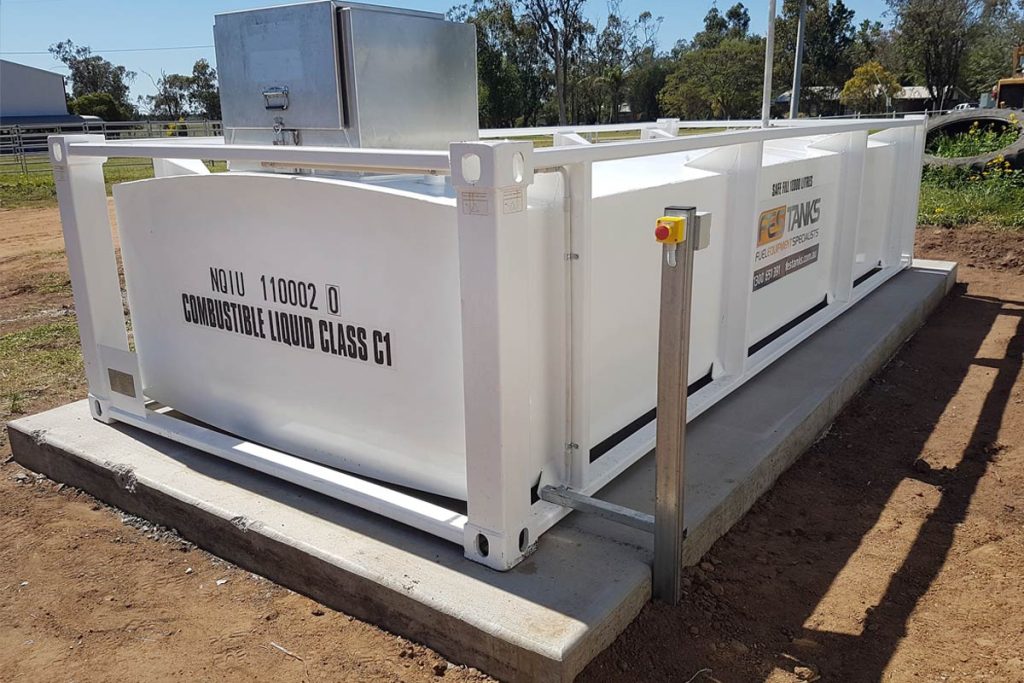
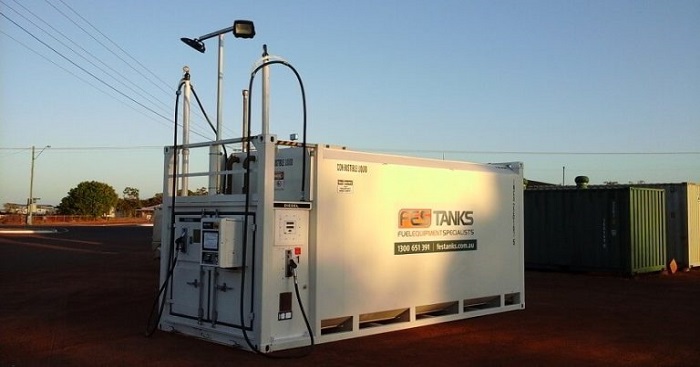
The F.E.S. self-bunded tanks range comes in sizes ranging from 1000 litres to 110,000 litres built to international standards. The dual wall construction protects the environment against leaks, protects against fuel loss and degradation and saves on excavation and construction work.

“Another great benefit is that they are fully modular systems which makes site design simple. Everything, including connecting pipework, walkways and ladders can now be prefabricated and put together on-site,” says Extreme Industrials General Manager Ados Momoh.


“The tanks are also compatible with advanced fuel management systems that can keep track of fuel usage in real time – these systems can significantly streamline the refuelling process and dramatically reduce losses.”

To find out more about F.E.S. TANKS in Nigeria contact the experts at Extreme Industrials, www.extremeindustrials.com.


OTL Africa Downstream Week 

Extreme Industrials will be exhibiting at OTL Africa Downstream Week (in space C5) from 27-30th October 2019 at the Lagos Oriental Hotel. Feel free to drop in and talk to the Extreme Industrials team should you have any questions about your current fuel storage and management issues.

This event is globally acknowledged as the biggest platform for downstream oil & gas businesses in Africa.

Extreme Industrials OTL Africa Downstream Exhibition information

To learn more about OTL Africa Downstream Week, click here.  
Operating in PNG? Here’s why you need a self-bunded fuel storage tank.

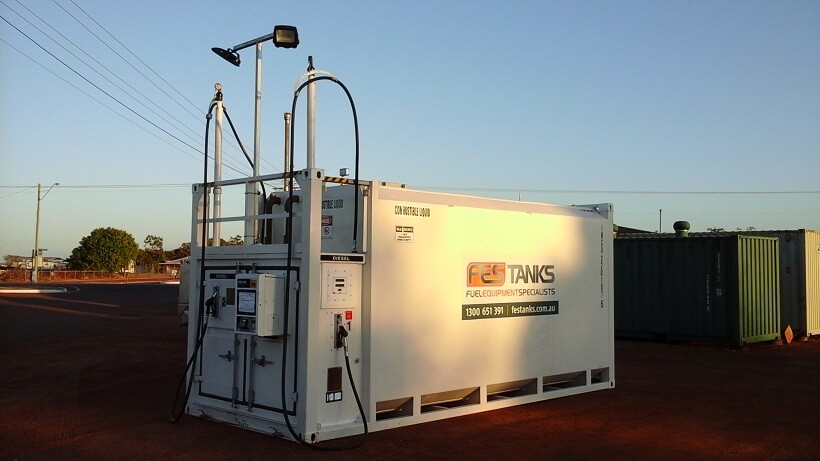
GRANDE30 - 24 Hour un-manned refuelling station

Self Bunded Tanks in Papua New Guinea. The new frontier for fuel storage.

The November 2018 opening of Mobil’s new 5.6 million litre diesel storage tank at Port Moresby was flagged as a step towards improving national fuel security and meeting growing demand from industry.

Dunlop PNG’s James Green says another growing trend for regional operators is on-site fuel storage that puts the power back in the hands of business operators to buy wisely, maximise reliability and reduce transport costs.

GRANDE30 - 24 Hour un-manned refuelling station

GRANDE30 – 24 hour un-manned refuelling station

Fuel transportation challenges

For James, infrastructure and transport challenges are among the biggest contributors to fuel costs for PNG business.

Old and poorly maintained infrastructure in regional areas means fuel needs to be transported long distances along difficult roads.

“The state of the national highways means moving fuel around is difficult and expensive,” he says.
“Add to that that outside of the main coastal towns, the only access to more remote townships is via ship.

“The main Puma depot is based on Port Moresby, which is road locked, so all fuel everywhere else in PNG is shipped from Port Moresby and road freighted or transhipped to other coastal towns, meaning freight costs are extremely high.

“Some operators also ship directly from overseas to Lae, Kimbe and other townships.”

Quality control – access to clean fuel

Ageing infrastructure and transport issues have a flow-on effect for fuel quality.

“A lot of the diesel or petroleum on the market is water and particle contaminated, either from the storage tanks on the end user site, from tankers or in some cases direct from the source,” James says.

“Fuel prices are also linked to the Singapore price rather than the cost of production in PNG, which means the cost of the final product can be out of step with the local cost of living and doing business.

Taking control with on-site fuel storage tanks

For many businesses, reducing fuel costs and downtime has meant finding new fuel storage options like on-site self-bunded fuel storage tanks.

“Taking control of costs and quality is one reason many companies outside of the main towns have started looking to hold additional fuel on site, so there has been a marked increase in sale of storage tanks,” James says.

“In the past a lot of the tanks were owned by the major fuel retailers in return for locked in contracts of supply, but there has been a shift away from that system as customers are looking for the flexibility to change suppliers based on changing pricing and rebates.”

Self-bunded storage tanks in PNG: a cost-effective solution

James says F.E.S. fuel storage tanks are an increasingly popular solution because they give regional operators options to safely store fuel on-site without the need for fixed earthworks and bunds, meaning operators can maximise the volume of fuel stored while complying with safety and environmental regulations.

“Self-bunded tanks or double-wall containment for fuel storage have revolutionised refuelling for business and solve many of the major challenges for PNG operators,” he says.

“Having an integral secondary tank wall does away with the need to build an expensive bund wall system and makes traditional underground storage a thing of the past.

10000 litre self bunded tank


“They are also ideal for situations where there are logistical challenges or isolated locations, because tanks can be easily installed on-site wherever is convenient, and moved safely when business needs change without compromising fuel quality.

“Storing your fuel on site in an F.E.S. tank gives you greater control over price and when you buy and over fuel quality, which means you can maximise fuel efficiency and minimise damage to equipment and downtime caused by dirty or contaminated fuel.

“Our self-bunded tanks come in sizes from 1000 to 110,000 litres, are compatible with a wide range of pumps and dispensers and can be transported by road, rail or sea.

“Best of all, installation costs are reduced to laying a suitable pad and connecting electrical supply and parts and service are available in-country, which is a major cost saving for local business.”

Dunlop PNG

DUNLOP PNG has been servicing the business community in Papua New Guinea since 1969. With over 35 years in the industry, the Dunlop team has a sound knowledge and practical understanding of business conditions in Papua New Guinea.

The business has branches in Port Moresby, Lae, Madang, Mt Hagen, Alotau, Kimbe and Popondetta.

Find out more about the F.E.S. TANKS range and how our experts can help you design the right fuel storage system for your business at www.festanks.com.au


Fuel Storage Challenges In Remote Locations

fuel storage tank in remote locations

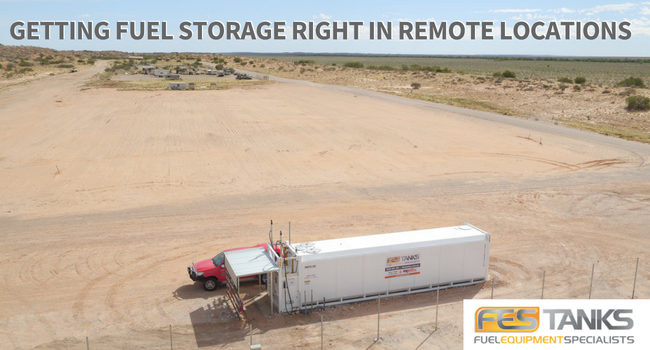
Remote control – getting fuel storage right in remote locations

When you’re a regional council or a transport business operating in a remote location, fuel usage is a significant cost.

fuel storage tank in remote locations

Our experience working with remote operations means we know where your pain points are, and we can help you design solutions that are right for you.

Broadly, some of the most common problems our remote customers face relate to fuel theft and inefficient refuelling logistics.

Think creatively – explore the latest fuel storage options

Losing fuel by theft from your tank or your vehicle is a common problem.
Many operators try to run fuel levels down at the end of every day to minimise the attraction for would-be thieves, but fuel storage has come a long way and the range of fuel theft solutions available is as extensive as the different needs of remote operations.

If you want to make a positive change that will help contain fuel costs and boost your bottom line, a good starting point is your fuel storage tanks. It may seem obvious, but this is an area where upgrading to newer solutions can have a huge impact.

For example, we’ve worked over the last several years with a local council covering a region of 94,000 hectares in outback Australia. When they first came to us, their fuel storage systems consisted of old-style, single skinned tanks in frames mounted to semi-trailers. While the trailers could transport the tanks to their various work locations, they were then there for the duration of the job – often several months. What’s more, the tanks weren’t secure and could easily be drained by thieves.

Upgrading to our aboveground fuel storage tanks that are self bunded and fully transportable meant not only was the fuel far more secure in dual-walled environment with lockable access hatches, but the tanks could easily be transported between work sites and left on-site while the truck and trailer went back into the fleet, maximising use of their equipment.

What’s more, moving from old-style cylindrical tanks at their depots meant they could significantly increase their storage capacity without increasing their storage footprint.
Finally, fuel theft was reduced because, after all, it’s a lot harder to break into a fuel tank that’s double-skinned and has lockable access doors. Using a modern, integrated fuel management system that can monitor usage to the litre also makes it easy to identify and address problems early.

Act logically – getting the logistics right

Once you’ve considered the tanks you’re using, the next step is to look at the location of your storage and your fuel management systems.

If your vehicles have to travel long distances to refuel, that’s an inefficient use of time, fuel and plant resources.

There’s a human resources element too – when you’re covering large distances and have fuel stored at one or two sites, sending somebody out to read fuel levels and monitor usage can be a significant task.

Talking to an expert about the best solution to suit your workflow can help you find new ways to maximise efficiency and minimise waste.

Using a combination of fixed fuel storage at depots or bases, with mobile tanks that can be dropped at remote work sites and moved to meet work requirements, is often a good choice. And with the introduction of modern level gauging systems that can monitor fuel levels remotely, it’s now easier than ever to monitor fuel levels and usage at all your storage locations without the expense of manual checks on site.

Ask us about a solution for your business

Whatever your business, if you’re working in a remote environment there’ll be challenges.
With more than 100 years combined experience in the fuel industry, our technicians are experts in remote refuelling solutions and can work with you to plan the best solutions for your operation.
Call us on 1300-651-391 or get in touch here.

Storage and Handling of Flammable and Combustible Liquids Standards

AS1940-2017

Changes to AS1940:2017 and what this means for you?

Are you up to date with changes to fuel storage regulations?

Australian Standard 1940 (Storage and Handling of Flammable and Combustible Liquids) was formally updated in August 2017. This change is important, because the standard forms an important reference for our State and Territory fuel storage legislation.

AS1940-2017

Significant changes include:

  • Self Bunded Tanks: The maximum capacity of self-bunded tanks has been increased to 200,000 litres for combustible liquids on mine sites, allowing more economical storage of fuel on site and creating greater opportunity for flexible fuel storage options.
  • Liquid levels in tanks: AS1940 now limits a tank’s Safe Fill Level to no greater than 95 per cent of tank capacity. For above-ground flammable liquid tanks over 5,000 litres, or 25,000 litres for combustible liquid, a high-level alarm is now required.
  • Spill response: A spill response kit is now a mandatory requirement for sites handling Class 3 flammable liquids. The kit should consist of “some or all of absorbent pads, booms, loose absorbent and contaminated waste bags that are packed in a readily identifiable reuseable weather-resistant container and are compatible with liquids stored”.

Can I still store flammable product in above-ground tanks?

The short answer is yes. Standard Category 3 above-ground self-bunded diesel tanks can also be used to store Flammable Product like motor spirits, but there are specific signage and venting requirements. If you’re ordering a tank for this purpose, it’s important to let us know so we can supply the correct tank for your application.

You can find detailed information about the storage of flammable liquids in AS1940-2017.

The key points you need to be aware of are:

  1. Identify the hazardous area: The biggest difference between on-ground Diesel Storage (combustible) and motor spirit storage is the hazardous area that it creates. Basically, this is the area in which an explosive is present in quantities large enough to require special precautions for the construction, installation and use of potential ignition sources.
  2. Choose a location: When choosing a location for above-ground flammable storage there are many legislative requirements. Location of your tank will need to adhere to the tables outlined in the Standard. Special circumstances may be granted if tanks or firewalls can be built to maintain a Fire Rating Level of 240/240/240.
  3. Electrical installation: Electrical installation requirements are particularly stringent in flammable storage, and must comply with AS3000. All electrical equipment within a hazardous area must have correct explosion-proof connections and fittings. It is always good practice prior to any installation to have a Hazardous Area Zoning completed by a competent person as per AS60079.10, to ensure the correct equipment is assigned and approved for that application.
  4. Signage: This is a key aspect of flammable storage. All signage must be upgraded to comply with regulations.
  5. Hatches and vents: AS1940-2017 requires that explosion-proof hatches and PV vents be fitted to flammable storage tanks. The size of these will vary according to tank storage volume.
  6. Dispenser: When storing flammable liquids, the dispenser needs to be mounted remotely from the tank due to the Hazardous Area Zoning around the tank.

Ask the fuel experts

There’s no substitute for experience. When it comes to storing flammable liquids safely and in compliance with the Australian Standard and State and Territory regulations, getting the right advice from the start can save you money, reduce risk and give you peace of mind.

The new standard now applies to all service stations and bulk fuel facilities as well as other sites where flammable and combustible liquids are stored.  If you’re not sure whether you’re still compliant, call our expert team at F.E.S. TANKS.

Top five reasons to buy a self-bunded fuel storage tank

Top five reasons to buy a self-bunded fuel storage tank

You’re looking at fuel storage options for your farm, home or business, but it’s difficult to make a decision. There are a number of variables to consider – capacity, location, maintenance requirements, accessibility and environmental requirements, to name a few.

Self-bunded tanks, which are double-walled or skinned, are an increasingly popular option for a number of reasons.

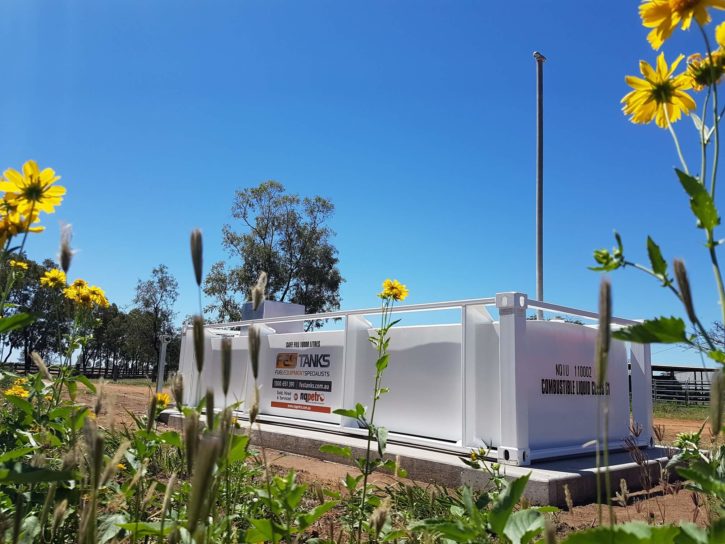
10000l self bunded tank on the farm, flowers, blue sky

Top 5 benefits of a self bunded tank:

  1. Cost savings: When you buy a self-bunded tank, the savings start with the set-up. Because they incorporate a built-in containment system for ruptures and leaks, self-bunded tanks eliminate the need for specialist civil engineering or building works involved with building an external bund. Typically, buying a self-bunded tank works out at about half the cost of using a single walled tank and building a bund.
  2. Compliance: Buying a self-bunded tank that is certified to Australian Standards is the best way to ensure your fuel storage complies with environmental legislation in your area. A properly maintained bunded tank and refuelling system – including valves, pipes, pumps and hoses – is also the best protection you have against fuel leaks that can cause soil or water contamination and six-figure fines.
  3. Flexibility: A self-bunded tank is a drop-and-go option, so not only can you use your fuel storage immediately, you can safely and easily transport your tank to another site. Smaller portable self-bunded tanks are available in sizes up to 10,000 litres, meaning when your worksite moves with seasonal changes or project demands, your fuel storage can move with it. Our fully transportable Grande tanks store up to 68,000 litres of fuel, for operators with high fuel turnover and storage requirements. Again, there are cost and efficiency benefits because refuelling can take place on or near your worksite, wherever the site is. To make this option even more flexible, F.E.S. TANKS can even provide solutions for hard-to-access areas, like our HULK self-loading system that makes it easy to position and relocate high volume tanks without a crane lift.
  4. Keeping your fuel in great shape: Because self-bunded tanks are easy to maintain and to access for maintenance, it’s easy to keep your tank in great shape – and keeping your tank healthy means your fuel with stay fresh for longer. That in turn means your vehicles will run more efficiently, and your business will benefit.
  5. Security: Self-bunded tanks also offer a high level of built-in security, with a lockable hatch across all access points that can be secured with a heavy padlock when the tank is not in use.

The F.E.S. range of self-bunded tanks comes in sizes from 1000-110,000 litres and offer unbeatable quality and the added advantage of a safe fuel limit which is 10 per cent greater than standard tanks of similar capacity – meaning your tank can go longer between refills.

Call our experts on 1300-651-391 to find out more about our range or discuss your needs and let us build the tank that’s right for you.

How often should you dip your fuel tank?

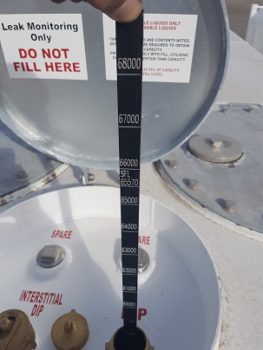
Dip your Fuel Storage Tank to Maintain Fuel Quality

A quick dip of your fuel tank is a must for any business that relies on vehicles. After all, you can’t afford to take chances with fuel quality.

Testing fuel quality regularly saves your business tens of thousands of dollars. And all it takes is a quick dip check of your fuel tank.

Maintaining your fuel and your fuel tanks is critical to keeping your fleet running at optimal levels.  So how often should you dip your fuel tank?

Why should I dip my fuel tank?


Regular dipping ensures you can detect fuel loss early and take action to stop it.


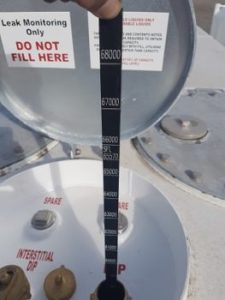
Dipping your fuel tanks is good business practice because it reconciles the fuel left in your tank with what has been sold out of the bowser, and will quickly pick up any discrepancies. This means you know quickly if you are losing fuel through leakage, theft or poorly calibrated dispensing systems.

A leaking fuel tank not only impacts your business by reducing your supply levels – if left undetected,  it can mean serious safety issues and significant fines from local regulators.

There’s also the case of checking on where leaks are coming from. Particularly if you own an older fuel tank. Many older underground tanks have suction lines that run close to the bottom of the tank, increasing the chance of sucking water or silt into vehicles and causing damage. This damage then increases the chance of leaks forming over time.

There’s also the case of monitoring silt levels too. Silt forms at the bottom of tanks slowly as fuel breaks down when stored over long periods of time.  When a truck goes to unload its product and pump it into the tank, this silt may get stirred up. If it gets into the customer’s vehicle, it may cause blocked filters and potentially more serious issues.

Keeping a close watch on the levels in your fuel storage tanks keeps your fuel in good condition and prevents these issues from occurring.


Fuel dipping can detect water and pollutants in your fuel storage tanks.


If water gets into your fuel supply, it can do serious damage to both your fuel supply and any vehicle carrying it,

Water contamination in fuel tanks can cause anything from intermittent power loss to engine failure. This could lead to anything from blown injectors to cracked components. This is a virtual nightmare for anyone fuelling an entire fleet of vehicles.

It also creates an ideal breeding environment for microbes which can degrade your fuel and cause phase separation, particulate contamination and tank damage.  This is caused by acids from the microbes as they feed on the fuel.

Therefore, dipping your fuel tank can alert you to these issues and find ways to treat it.

So what will I check for when I dip my fuel tank?

Essentially, when you dip your fuel tank, you’ll be looking to ensure the fuel that is missing from your tank is equal to the amount you’ve distributed from your bowser or point of sale system.

You can keep a record of your levels with a fuel management system. If you’re supplying a fleet of vehicles, a good system will give you an early warning if a vehicle is not performing well or needs servicing.

You should also test for water by using a water-finding paste on your dipstick. Drain any excess water immediately to keep your fuel fresh and reduce the potential for microbial contamination.

Finally, using a fuel sample test kit is good practice to ensure your fuel is free from microbes and particulates.

How often should I dip?

For a commercial fuel supplier, it is to dip your fuel tanks daily to check fuel levels and test for water contamination. Ideally, you would also use a fuel sample test kit regularly and keep up regular inspections of and maintenance on your tanks and fittings.

If you only store a small amount of fuel and use it irregularly, you should always dip your tank and test for water before you fill it up. Suppose you store your fuel for long periods, for example for seasonal farm work. In that case, it’s worth taking a sample before you fill up machinery to avoid unplanned downtime and lost productivity due to damage and equipment failures caused by water or particulates in your supply.

What if I discover a problem?

Discovering any problems with your fuel tanks calls for immediate action. Should you discover a leak, quickly test to find the cause and look for the best solution to quell the leak.

If your fuel is contaminated,  your tank will need to be filled and dosed with a biocide which will help address the problem. Using these will help kill off microbes and improve overall fuel quality

That’s why knowing how often you should dip your fuel tank is a basic but essential part of everyday fuel maintenance to save both time and money.

If it’s time to replace your tanks, F.E.S. TANKS has a complete range of fuel storage systems for sale or hire to suit all fuel storage needs.

Contact our industry experts to find out the best fuel storage options for your business.

Generator Safety Checklist – Get the Jump on Storm Season

Generator Safety Checklist for Storm Season feature image.

Get the Jump on Storm Season with our Generator Safety Checklist

IF you’re in Australia, the start of the new year means it’s time to think about preparing your home or business for storm season.

generator safety checklist header image

In December, severe thunderstorms hit south-east Queensland and left thousands of homes and businesses across South Australia without power. South Australia’s September 2016 storms cost business an estimated $367 million due a statewide power outage.

Heat wave conditions sweeping the eastern states in January can prove just as critical, particularly if you have refrigerated stock.

A portable generator can literally be a lifesaver at times like these. In weather emergencies, a generator can help you keep your business running or get your home life back to normal quickly, open communication lines and ensure you can perform essential tasks like pumping water and cooling food.

On the flipside, a generator failure can be catastrophic. It’s worth taking the time now to ensure your generator is in good working order, which includes cleaning out old fuel from tanks and checking for leaks.

If you only use your generator in an emergency, it’s worth taking action to ensure your fuel stays fresh. When fuel sits in tanks unused for months or years it can become stale, and issues like diesel bug and sedimentation can gum up the fuel lines, filters or carburettor.

Most fuel only stays fresh about three months in ideal storage conditions, although diesel can keep for longer. If you’re using old fuel cans or don’t keep your cans fuel, your supply could degrade quickly and leave you in the lurch when a storm hits.

Keep Your Generator in Good Shape with a Generator Safety Checklist

Before storm season, you should:

  • Check and clean or replace your fuel containers. Small jerry cans or drum storage containers are easy enough to inspect and replace. If storing large volumes of diesel it’s a good idea to treat your fuel with a biocide to keep it fresh and stable and ensure maximum efficiency when you need it.
  • Remove your generator from storage, drain the fuel from the tank and dispose of it properly. Ergon Energy recommends you inspect the fuel line for cracks and replace if necessary. Refill the tank with fresh fuel and run the generator. Plug in some appliances, like a light or a hair dryer, to make sure the generator is working properly. If you have any trouble with the generator during this test, take it to be repaired so it is ready for when you need it.
  • Make sure your generator has enough oil. If it’s been used heavily, it might be time for an oil change. Watch a how-to video here.
  • Ensure you have a heavy duty, weatherproof extension cord that is rated for outdoor use. Check that the cord isn’t damaged or worn.
  • Know your generator’s limits. Each generator has a rated wattage which provides a limit on the appliances it will safely power. Follow the manufacturer’s recommendations for proper use and capacity and don’t try to connect lots of appliances at once.
  • Rotate the use of larger items. Remember, overloading your generator can result in damage to appliances it is powering.

Basic Generator Safety Tips

There are some basic safety tips that will keep you and your family or business safe if you need to use your generator in an emergency.

  • Don’t plug your generator directly into your home’s wiring. Power from a generator connected to a home’s wiring will ‘back feed’ into powerlines, potentially causing a safety hazard for you, your family, neighbours, and energy workers, and causing possible damage to your generator when mains power is restored.
  • Appliances can be plugged directly into the generator but always read the manufacturer’s instructions carefully.
  • Use a heavy-duty extension cord rated for outdoor use.
  • Always follow the manufacturer’s recommendations for earthing the generator.
  • As petrol and diesel-powered generators produce deadly carbon monoxide fumes, always run portable generators outside the house – never inside or in a garage. Keep generators well away from open windows – including your neighbours’ – so deadly exhaust does not enter the home.

A little preparation can make all the difference during storm season, keeping your business operating and ensuring you and your family stay safe and comfortable even when power is lost.

To ensure your generator and your emergency fuel supply are stored safe and sound, give us a call the on 1300-651-391.

Australia’s first self-loading relocatable self bunded bulk fuel storage solution

HULK - hydraulic un-loading kit for self bunded tanks

Australian-first self-loading, relocatable bulk fuel storage solution

THE search for a better fuel distribution solution for a remote inland shire council has led a Queensland collaboration to come up with an Australian-first. The Hydraulic Un-Loading Kit (HULK) is an optional self-loading system grafted onto a bulk self bunded tank.  It offers a complete self-sufficient relocatable bulk fuel storage solution – and this idea’s got legs!

Diamantina Shire Council on the border of Queensland, Northern Territory and South Australia understand the challenges of managing the dispensing, storage and relocation of fuel in remote locations. Construction sites in outback Australia present certain challenges, like a distinct lack of infrastructure and logistics that urban locations take for granted. It was this challenge that prompted Diamantina Shire Council to come up with the concept of a self-loading fuel storage system that would improve logistics, reduce costs and streamline the council’s remote refuelling operations.

Diamantina Shire Council appointed Cairns based Nqpetro, a specialist fuel fit-out company to help bring their concept to life. Nqpetro appointed the market leader in self bunded storage tanks, F.E.S. TANKS, and together the innovative HULK design was born.

The HULK will improve fuel management and logistical costs on hard-to-access remote work sites.

Here’s a demonstration of this impressive new system in action:

F.E.S. works with local government and major industry across Australia to provide innovative next-generation fuel storage solutions designed to take business into the future.

“They were using older style portable above-ground tanks and were continually having to move them, which posed a threat to the integrity of the tanks and a potential environmental and safety risk,” F.E.S. business development manager Daniel Porter says.

“They sometimes had three tanks on the back of a semi-trailer, chained to the tray.

“Theft was a problem too, because there were only certain ways you could lock the tanks.

“The previous fuel distribution systems were also very basic with no filtration and a 240V pump that was hooked up to extension leads.

“Anyone wanting to steal fuel could rock up after hours, plug in their power source and take as much as they wanted.”

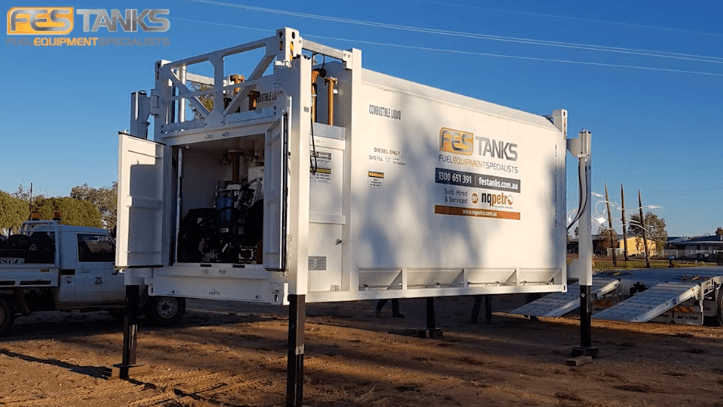
The F.E.S. team, who are known for creating tailor-made fuel solutions for business, consulted on the adaption of the HULK system to a self-bunded, high quality 28,000-litre F.E.S. Grande tank. With it’s in-built hydraulic legs engaged it allows the truck to simply drive away while the tank lowers itself into position.

The system makes it easy to position and relocate tanks at remote sites without the cost or logistical issues associated with a crane lift.

It means the council can more securely and safely carry high volumes in a single self-bunded tank, virtually eliminating the risk of fuel leaks due to structural breaches.

The HULK also dramatically reduces opportunities for theft, with the pump contained inside a lockable door, with a separate lockable isolation switch.

The pump has 24V and 12V options so it can be battery powered in case of power failures.

“Basically, it means they can go easily to more remote sites with a bigger volume of fuel storage and enhanced safety, portability and efficiency,” Daniel explains.

“As part of the engineering process we built in additional capacity too, so if they wanted to we could use the system on even our Grande 68,000-litre tanks.

“This system is already attracting plenty of attention from councils and has great potential for the civil construction sector too.”

F.E.S. TANKS would like to extend a big outback thankyou to Diamantina Shire Council for the opportunity to be a part of such an industry changing concept.

For details on how the HULK or other self-loading options from F.E.S. TANKS could work in your situation, contact us on 1300-651-391 or get in touch via our contact form.

A Bulk Fuel Buying Guide for Farmers – Save Money Guaranteed

fuel tanker truck in the countryside

A Best Practice Guide to Purchasing Fuel for Farmers

The purchasing process is central to efficient use of diesel and other liquid fuels.

Factors influencing liquid-fuel-purchasing decisions include storage life, potential fuel losses, and the legislative and financial implications of large-scale on-site storage. Fresh fuel is more energy-efficient than aged fuel, and planning the delivery of fuel around peak demand is key to effective fuel management. There are a number of buying strategies that can help you to negotiate the best price, avoid wastage and maximise return on fuel investment.

fuel tanker truck in the countryside

Introduction

Diesel and other liquid fuels account for up to 90 per cent of energy use in the NSW cropping and extensive livestock sectors (Energetics, 2013).

While farmers typically use large qualities of fuel – six-figure annual fuel bills are common – there are limits on their ability to purchase in bulk and gain the fuel price discounts achievable in other sectors of Australian industry.

This paper consid